Louisiana · 1930s · meat & poultry
Fried Chicken
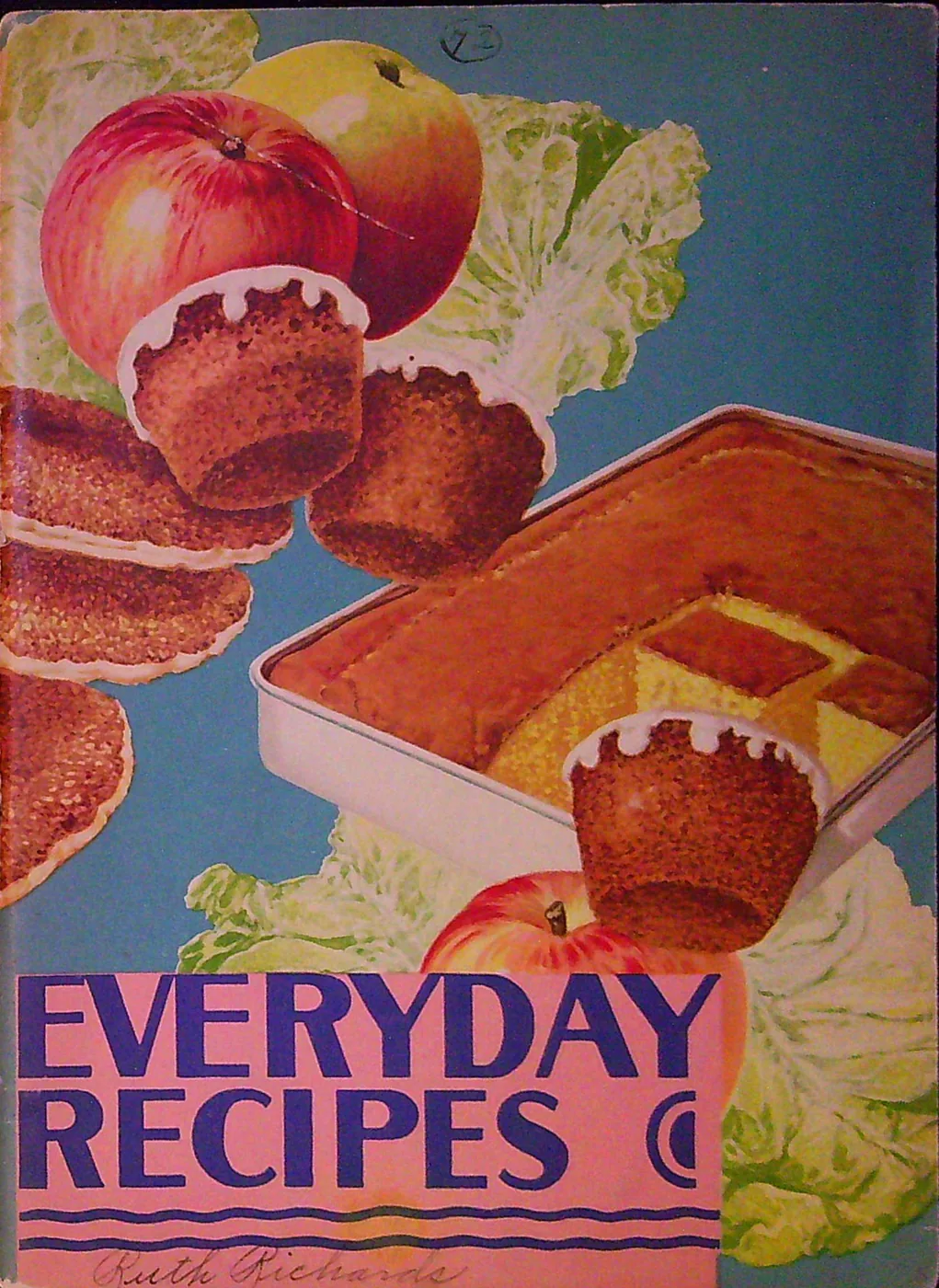
Everyday Recipes · Ruth Richards
The Wesson Oil People · 1930 · New Orleans, Louisiana · page 38
- Prep
- 15 min
- Cook
- 50 min–2 hr 20 min
- Serves
- 6
Cooking grid
Read left to right. Joined cells bring ingredients together; modern guidance is included.
| IngredientsOriginal quantities Modern equivalents below | Sift & cutStart here | DredgeWhen the flour is sifted | FryOil hot · about 20 min | SimmerWhen brown · 30 min (broiler) or 1–2 hr (full-sized) | Gravy & serveWhen the chicken is tender |
|---|---|---|---|---|---|
| ¾ Cup Flour90 g / 180 ml | Sift flour and salt together. Reserve 2 tablespoons in a clean dish before dredging, for the gravy. | Roll each piece of chicken in the sifted flour and salt. | Heat oil in a heavy iron frying pan or kettle. Add chicken in a single layer; fry in batches if needed. Turn only once. Fry about twenty minutes, until brown. | Return all chicken to the pan. Drain off all but ¼ cup fat. Add water; simmer very slowly until tender. Replenish water as needed. Check the thickest meat reaches 165°F / 74°C. | Use the pan drippings and 2 tablespoons of clean, reserved seasoned flour to make gravy. Whisk in milk or cream gradually. Season to taste and serve with the chicken. |
| 1 Tablespoon Salt18 ml / about 18 g kosher, or 15 g fine table salt | |||||
| 1 ChickenOne young chicken, about 3–4 lb / 1.4–1.8 kg | Cut a very young bird in halves or quarters; disjoint a larger young bird as for fricassee. | ||||
| 1 Cup Wesson Oil240 ml; neutral high-smoke-point vegetable, canola, or peanut oil. Wesson is still sold. | |||||
| ½ Cup Water120 ml, plus more as needed | |||||
| 2 tablespoons seasoned flourReserved from the sifted mixture; from the method, not a separate printed ingredient | |||||
| 1 Cup Milk or Cream240 ml |
Original recipe
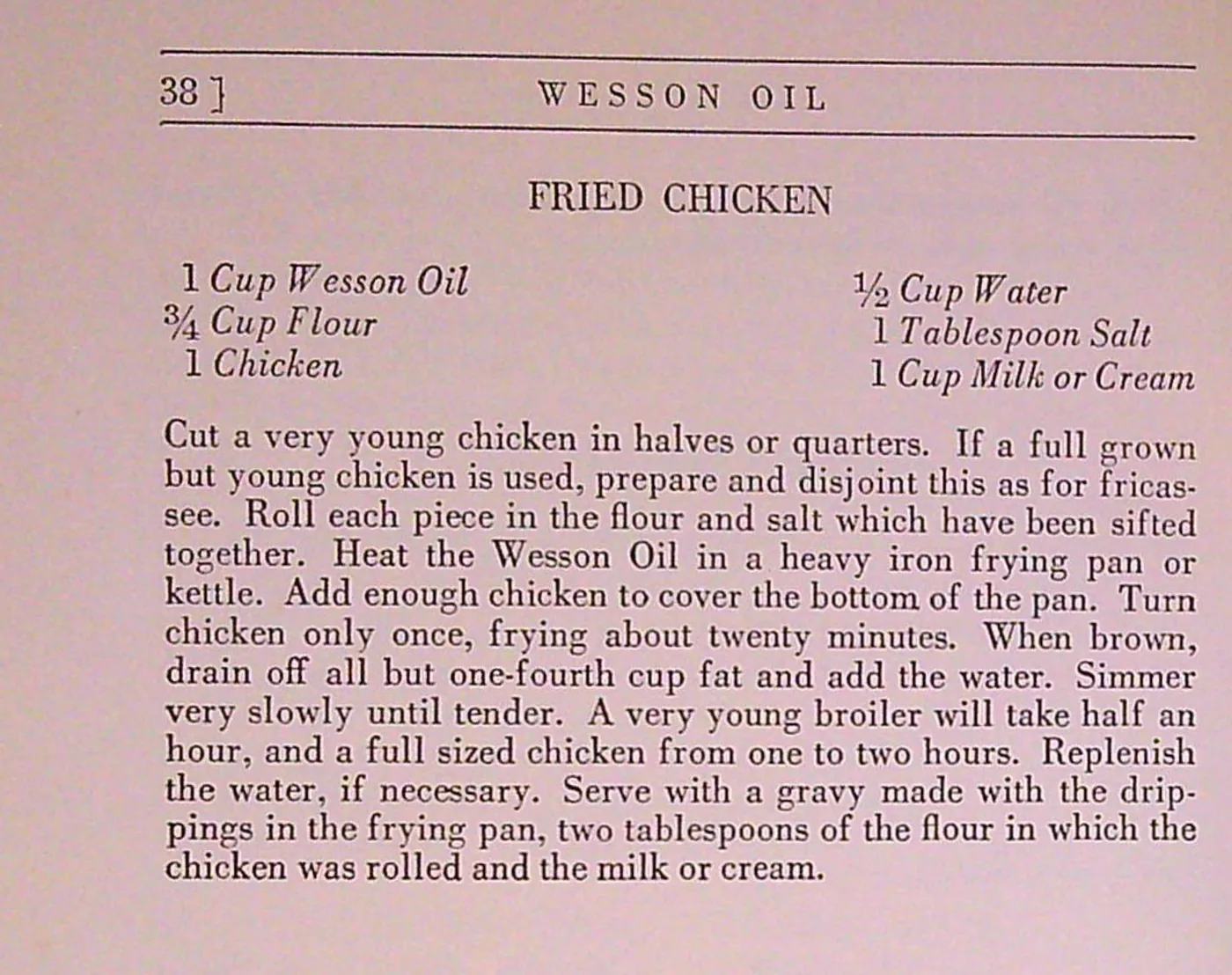
FRIED CHICKEN
- 1 Cup Wesson Oil
- ¾ Cup Flour
- 1 Chicken
- ½ Cup Water
- 1 Tablespoon Salt
- 1 Cup Milk or Cream
Cut a very young chicken in halves or quarters. If a full grown but young chicken is used, prepare and disjoint this as for fricassee. Roll each piece in the flour and salt which have been sifted together. Heat the Wesson Oil in a heavy iron frying pan or kettle. Add enough chicken to cover the bottom of the pan. Turn chicken only once, frying about twenty minutes. When brown, drain off all but one-fourth cup fat and add the water. Simmer very slowly until tender. A very young broiler will take half an hour, and a full sized chicken from one to two hours. Replenish the water, if necessary. Serve with a gravy made with the drippings in the frying pan, two tablespoons of the flour in which the chicken was rolled and the milk or cream.
Chef’s notes
- The book’s general rule: all measurements are level; recipes serve six.
- “Heavy iron frying pan or kettle” means a well-seasoned cast-iron skillet (or a heavy Dutch oven). Use a skillet large enough that the pieces sit in a single layer; if they will not fit, fry in batches and return them all before the simmer.
- Heat the oil until it is hot enough to sizzle a pinch of the dredge, but do not let it smoke. (The same book’s frying chapter recommends roughly 360–400°F / 182–204°C for chops and cutlets; a young chicken is closest to that range.)
- Food safety: cook until the thickest meat reaches 165°F / 74°C. The original doneness cue is “until tender.”
- Gravy: the original uses “two tablespoons of the flour in which the chicken was rolled.” For modern food safety, do not use flour that raw chicken actually touched. Scoop 2 tablespoons of the sifted flour-and-salt mixture into a clean dish BEFORE dredging, and use that for the gravy — or start a fresh tablespoon or two of flour. Whisk it into the ¼ cup drippings, then gradually add the milk or cream, and season to taste.
- A lid during the simmer is not specified in 1930. Leaving it uncovered follows the original; a loose lid will hold moisture if the pan runs dry. Replenish the water as the book says.
- No alcohol is used in this recipe.
- Wesson Oil was (and is) a refined cottonseed/vegetable salad oil marketed as a frying fat and shortening; any clean, neutral high-heat oil is a faithful stand-in.
From the book